
Shaping global policy on sustainable AI at the highest level
Davos – the World Economic Forum’s (WEF) Annual Meeting – is where global priorities for the year ahead are set. Focused on economics, politics, technology, climate, and international cooperation, it brings together some of the world’s most influential leaders and organisations. Having a voice at Davos means being heard by those who drive global decision-making.


Loughborough expertise on the global stage
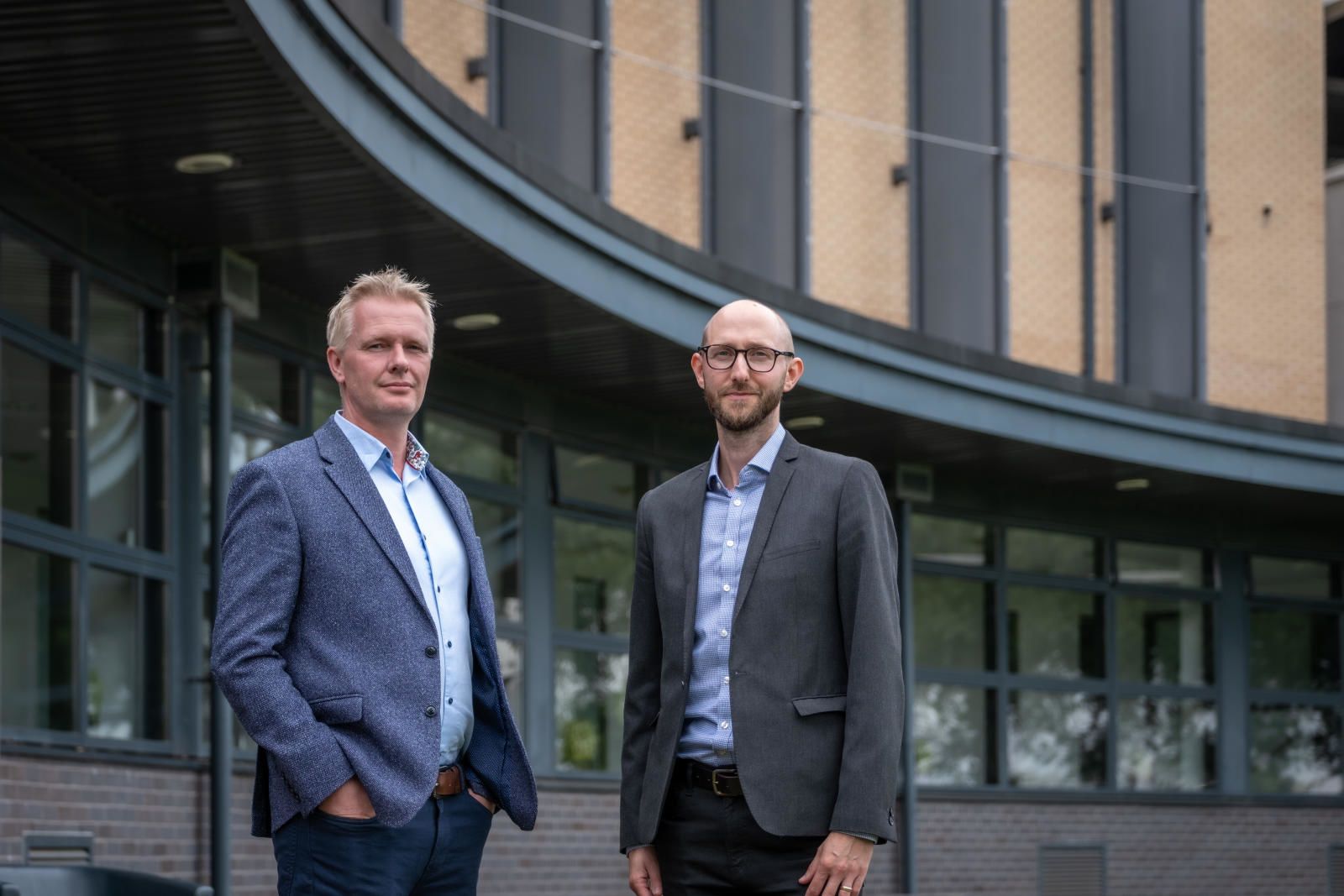
Professors Tom Jackson and Ian Hodgkinson from Loughborough Business School have become recognised authorities in how digital transformations, including artificial intelligence (AI) and data driven societies, are impacting climate change and economic growth.
Their expertise has positioned them as key contributors to two WEF White Papers, both set to be showcased at Davos – placing sustainable AI, and Loughborough’s world leading research in this field, firmly on the international agenda.
The first WEF White Paper – ‘From Paradox to Progress: A Net Positive AI Energy Framework’ introduces a practical framework for achieving Net Positive AI Energy, a future in which the energy and resource savings enabled by AI across sectors exceed the energy consumed throughout its lifecycle.
The second WEF White Paper – ‘Rethinking AI Sovereignty: Pathways to Competitiveness through Strategic Investments’, introduces a new approach for AI sovereignty – one that prioritises strategic control and resilience over rigid self-sufficiency.

From academic insight to global influence
Their significant impact on the Davos agenda underlines an incredible journey for Professors Jackson and Hodgkinson. Their research on Digital Decarbonisation – a term they coined as recognised by WEF – began early 2022, when they set out to discover the full extent of the carbon footprint produced by our digital activities.
Their groundbreaking findings have showcased the impact that issues like ‘dark data’, the growth of data waste, and increasing AI technology adoption are having on the escalating problems of carbon emissions and cost inefficiencies for organisations.
In 2024, they established the Digital Decarbonisation Design Group, supported by seed funding from a Vice-Chancellor’s Scholarships Award, to nurture the next generation of researchers and develop solutions that help industries transform their digital capabilities while keeping sight of climate and energy realities.
Alongside the WEF White Papers, the team’s expertise has informed major outputs across the OECD (Organisation for Economic Co-operation and Development), UK Government, and European policy communities – positioning Loughborough as a leading voice in how nations and industries pursue responsible, sustainable and climate-conscious digital transformations.


"Achieving sustainable AI requires us to think differently about how we deploy resources when building digital systems. If we consider the full lifecycle of data, networks and compute, we can identify opportunities for both cost efficiencies and environmental benefits. Net Positive AI helps organisations explore these choices in a more holistic way."
- Professor Tom Jackson -
A year of global policy impact
High-profile examples of the team’s contribution to key international publications from the last 12 months include:
The ‘Nature Positive: Role of the Technology Sector Insight Report’ is part of the WEF’s Nature Positive Transitions report series and sets out seven priority action areas for sector leaders to pursue.
The UK Government’s National Digital Twin Programme (NDTP) Ethics Strategy, shared and used across NDTP programme partners including: the Department for Science, Innovation and Technology, the Department for Energy Security and Net Zero, Strategic Command, the Royal Engineers, Royal Air Force, the Defence Science and Technology Laboratory (Dstl), the Ministry of Housing, Communities and Local Government, Infrastructure and Projects Authority, UK Research and Innovation, Ofgem, NATO, the Met Office, and the EPSRC.
The WEF White Paper – ‘Artificial Intelligence’s Energy Paradox: Balancing Challenges and Opportunities’, part of the ‘Industries in the Intelligent Age’ series and launched at Davos in January 2025.
The Department for Energy Security and Net Zero’s ‘The Impact of Data Centres’ Growth on Energy Consumption Report’ that examines how the growth of digital services, and the data centres that support them, affects energy consumption in the UK.
The French Ministry of Ecological Transition, Biodiversity, Forests, Sea, and Fisheries, in collaboration with the UN Environment Programme (UNEP) and the International Telecommunications Union (ITU), seminal position paper on sustainable AI design; launched at the Paris AI Action Summit in 2025.
OECD frameworks, including the Recommendation of the Council on Digital Technologies and the Environment – now in force across member countries – as well as the organisation’s draft revisions to future digital-environment policy.
"The countries that make the most of digital transformation like AI are likely to be those that invest wisely, developing the skills, energy systems and resilient infrastructure needed to support sustainable growth. It’s less about doing everything alone and more about making strategic choices that strengthen long-term digital transformation capabilities"
- Professor Ian Hodgkinson -
From niche concept to global framework
This comprehensive portfolio spans major global governance actors responsible for setting the discourse on digital sustainability – an impact few research groups achieve.
And thanks to these contributions, Digital Decarbonisation – once seen as a niche academic area – has become central to international thinking on digital technologies, energy use, and climate impact. The team’s research continues to shape new policy, regulatory frameworks, and industry guidance across the world.


 Built with Shorthand